



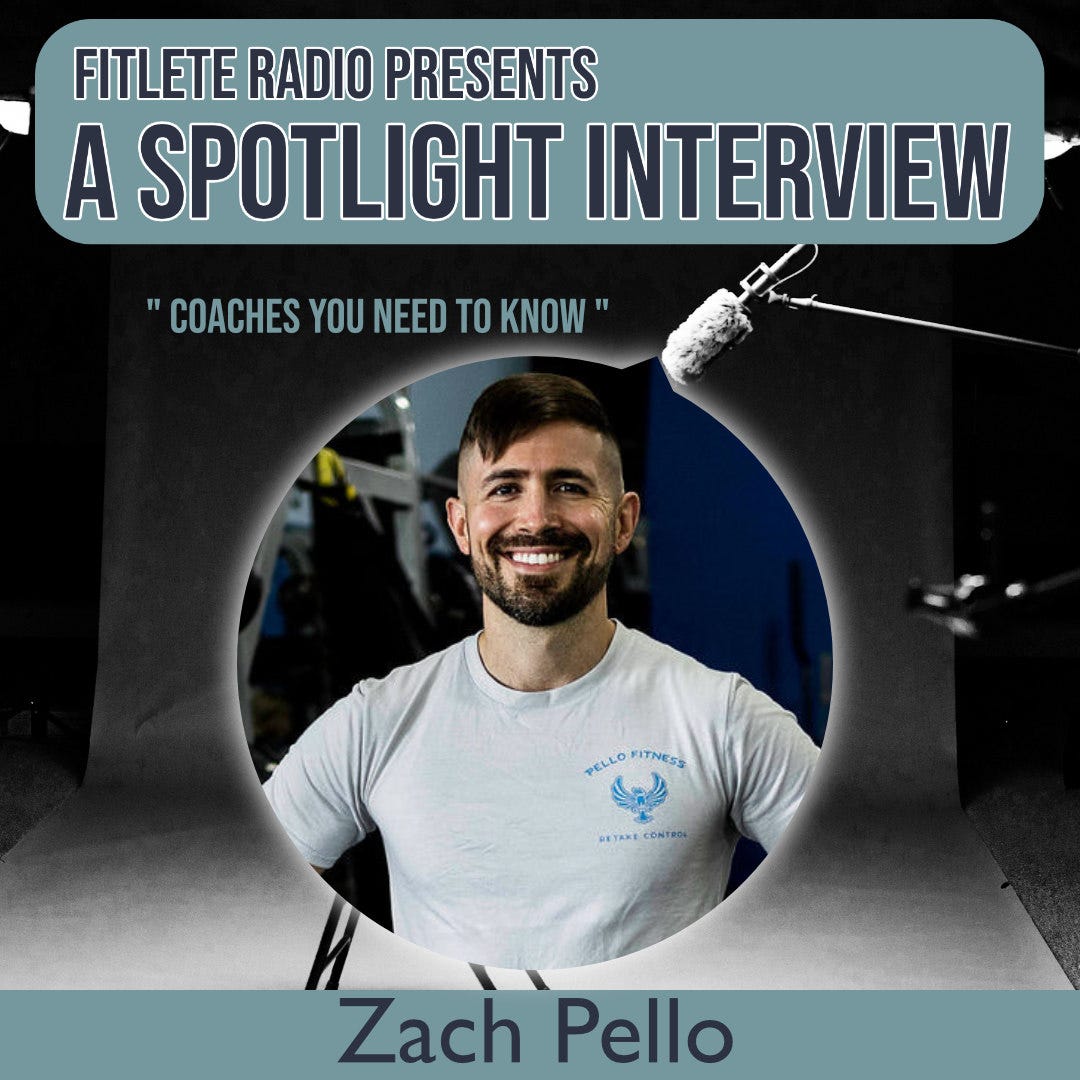
In this FITLETE Radio Trainer Spotlight, George chats with Zach Pello, owner and head coach of Pello Fitness, about coaching women in the “real world,” adapting training for injuries, navigating client misinformation, and using simple tech to keep people progressing for years. Zach has been training since his freshman year of college in 2003 and has spent most of his career as an independent contractor and small-group coach for women while continually leveling up his education through programs like Precision Nutrition. Outside the gym, he’s a lifelong gamer, mountain biker, camper, and dad who collects Pokémon cards and plays Magic with his kids.
Key takeaways
Meet people where they are: regressions, substitutions, and listening to preferences beat forcing the “perfect” plan every time.
Separate outcome vs. process: track simple, frequent metrics and build habits like training 3x/week or food tracking blocks before obsessing over the final goal number.
Experience and mentorship > letters: hands-on coaching, long-term client results, and real-world reps matter more than a wall of certifications.
Tech should make coaching easier, not fancier: a solid training platform plus email and clear systems can keep clients progressing for years without overwhelming you.
Coaching philosophy & client problem-solving
Zach’s approach revolves around “meeting the client where they are,” a concept that really clicked for him during Precision Nutrition Level 2 and completely changed how he programs. Instead of forcing idealized programs, he finds the minimum effective starting point and builds from there, using regressions like moving from back squat to front squat to goblet squat to air squat to match each client’s current capacity.
He leans on movement regressions and smart substitutions to work around pain and limitations: for example, prioritizing hip-dominant patterns when knees are cranky, then slowly reintroducing more knee-dominant work as tolerated. Just as important, he listens when a client simply dislikes an exercise and asks, “Does it need to be this movement, or will something less ‘optimal’ but still effective keep them progressing and engaged?”
“It doesn’t have to be the best. It could just be effective.”
Handling myths, goals, and expectations
When clients come in loaded with social media advice, Zach filters his response through a few internal questions: Will this still get them results? Is it unsafe? Does correcting them actually matter right now? Often he’ll validate that their approach can work, then ask for permission to share what he thinks might be better, which keeps the relationship collaborative instead of combative.
He also emphasizes adherence and context over dogma, noting he’s not personally big on keto or carnivore but won’t rip it away from a client who’s thriving and doing it safely. A big piece of his evolution as a coach has been accepting that science is always evolving, there’s a lot of gray area, and his job is to help clients find what they can stick to long-term.
“A lot of things work. The question is going to be like, what’s better, what’s not, and what can you adhere to better?”
For goal setting, Zach separates outcome goals from process goals and breaks big numbers into bite-sized steps. Instead of fixating on “lose 40 pounds,” he might focus on “drop 10 pounds in the first 8 weeks” while tracking easy, frequent metrics like bodyweight, measurements, clothing fit, and load on the bar.
“Outcome goals are great… but then push those aside and then they got to think about their process goals.”
What great coaches really need
Zach is candid about the limits of formal education: he calls his exercise science degree “a glorified certification” compared to what he learned under an experienced trainer who showed him all the nuances between the bullet points. When he evaluates another coach, he cares far more about their experience and client results than their alphabet soup of credentials.
He’s a big believer in mentorship or internship-style paths for new trainers and thinks longer, hands-on programs would drastically improve coaching quality. On the nutrition side, he sees certifications like Precision Nutrition or Mac-Nutrition Uni as valuable baselines for answering everyday nutrition questions confidently while respecting scope of practice.
Tech Zach uses in his business
Zach keeps his tech stack simple but intentional, focusing on tools that make coaching scalable without losing the personal touch.
PT Distinction (white-labeled as Pelo Fitness) to build templates, deliver programs, send broadcast education videos, and track years of training data so he can instantly see what a client did last year and build from it.
Email software for nurturing leads and sending deeper educational content, while reusing structures like full-body templates for groups and tweaking the “placeholders” for each client’s needs.
He notes that most of his group clients follow similar full-body layouts (e.g., leg + push, leg + pull, arms, core), and the app lets him scale that structure quickly while still personalizing exercise selection and progression.
Connect with Zach & resources
Pello Fitness site: Pello Fitness – personal training and women’s fat loss coaching in Carmel, IN.
Instagram: @pellofitness – women’s fat loss, strength, and educational content from a 20+ year fitness pro.


