



In this FITLETE Radio Trainer Spotlight Q&A, Ren discusses how 15 years in the industry, mainly working with seniors and “everyday people,' have influenced his views on assessments, goal-setting, and filtering fitness misinformation. The conversation covers how he combines empathy with evidence-based methods, why working with older adults is ideal training for new coaches, and how he integrates technology without compromising his traditional relationship-focused approach.
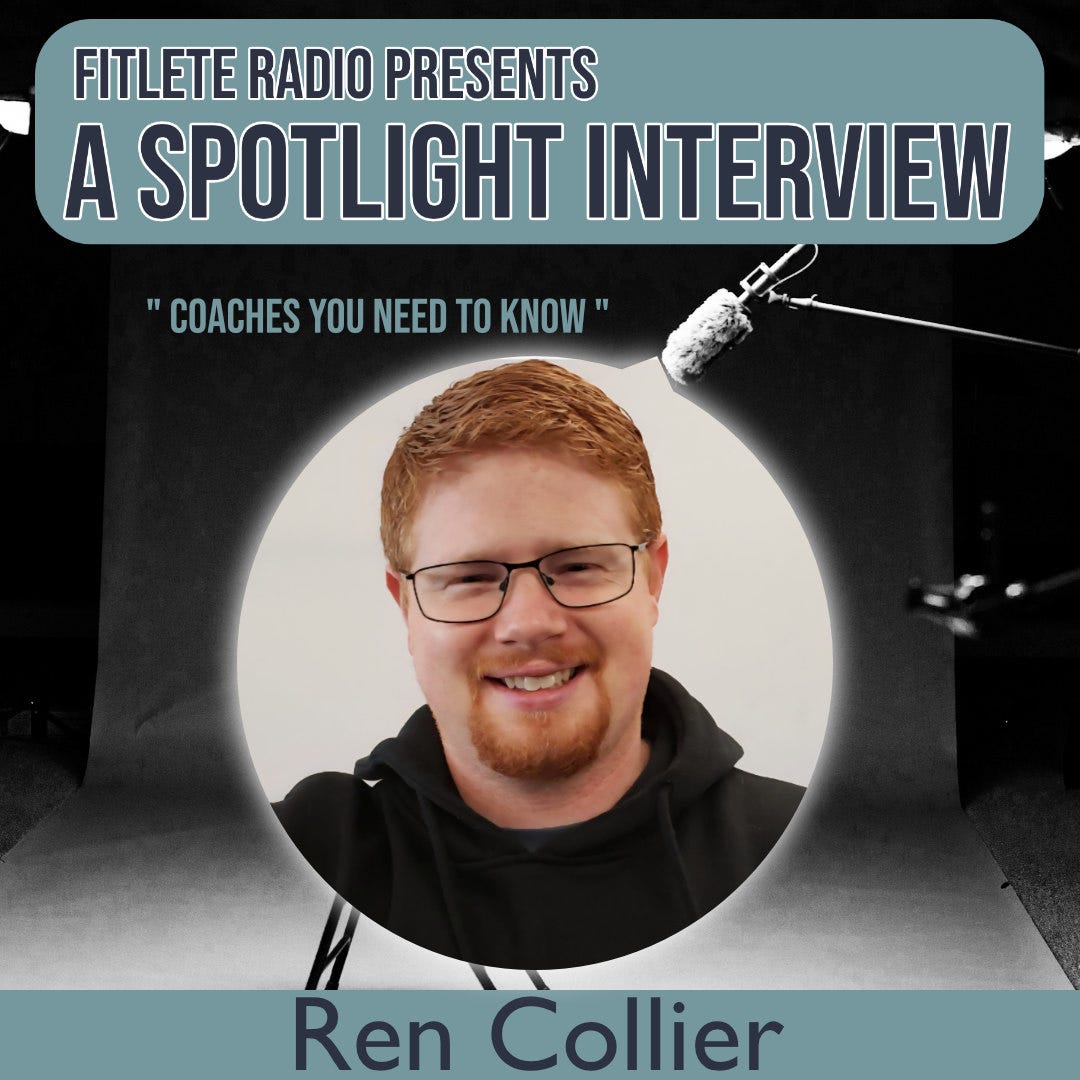
Meet Ren Collier
Owner of Fit RX, a personal training business built around helping adults “get their lives back,” whether that means keeping up with grandkids, returning from injury, or feeling confident in their bodies again. He’s Certified personal trainer with a bachelor’s degree in health science who has spent most of his career coaching seniors and general population clients toward better strength, balance, and long-term health. Ren Runs one-on-one, semi-private, and small group training with a strong emphasis on community, teamwork, and making the gym feel welcoming rather than intimidating.
3 standout quotes
“The biggest thing is to find out what they can do, where they can start…then we progress over time.”
“One of the most important lessons I learned from college was to always question things, not listen to the dogma.”
“You can only learn so much from a book…there’s so much you learn just by getting into the industry and working with people, especially seniors.”
Key takeaways
Coaching around pain and limitations
Ren treats every new client like a puzzle to solve, starting with a thorough intake of past injuries, surgeries, and chronic conditions, followed by a movement assessment. Instead of fixating on what clients “can’t” do, he looks for the safest entry point—maybe that’s a sit-to-stand or leg press instead of a barbell back squat—and then progresses from there.
He emphasizes:
Scaling exercises (e.g., bodyweight or goblet squats instead of heavy barbell work) rather than removing movements entirely.
Adjusting load, volume, and exercise selection based on how the client’s body responds that day.
Referring out when issues are beyond his scope, while building trust so clients feel confident trying “scary” movements again.
Cutting through fitness and nutrition myths
Ren is intentional about how he answers client questions that come from social media and friends. If he doesn’t know, he says so, then either digs deeper or refers to someone more qualified, which builds credibility instead of pretending to have all the answers.
His myth-busting style:
Explain concepts (like calories in vs. calories out or basic nutrition) in plain language, avoiding jargon.
Be picky about who he follows online, steering clear of people chasing likes and controversy over solid education.
Use the “always question dogma” mindset he learned in school to avoid fads and trends that don’t hold up.
Making multiple goals actually work
When clients show up with a laundry list of goals, Ren starts by digging into the why behind each one. He wants to know if a goal really matters to the client or if it’s just something they think a trainer wants to hear.
From there he:
Checks whether goals can realistically coexist (e.g., getting leaner and building muscle vs. trying to break powerlifting records and run a competitive marathon at the same time).
Talks through trade-offs and timelines, making it clear that chasing multiple compatible goals is possible—but often slower.
Builds plans that balance strength, conditioning, and lifestyle (like hiking with kids) instead of forcing everything into one narrow track.
What great coaches should know
Ren admits he thought he was “the best trainer” right out of school—until real clients humbled him. He credits working with seniors for accelerating his growth, because it forced him to modify, think on the fly, and adapt when the textbook version of an exercise simply wasn’t possible.
Ren’s essentials for coaches:
Solid fundamentals in anatomy, physiology, energy systems, and basic nutrition (macros, micros, and calorie balance) to design safe, effective programs.
Real-world reps with a wide variety of bodies and medical histories, especially older adults.
Social skills: the ability to connect, communicate, and make people feel comfortable—because the busiest coaches aren’t always the most knowledgeable, but they are the best at relationships.
Using tech without losing the human touch
Ren calls himself “a little bit old school,” still using a composition notebook to track many workouts. He does, however, leverage social media, email (via tools like Mailchimp), and even AI to help with education, marketing, and ad creation.
His tech philosophy:
Use tools to expand reach and support education, but don’t rely on them to replace real coaching.
Maintain at least a basic website and social media presence so potential clients can find and vet you, even if most business still comes from referrals and word of mouth.
Remember that exceptional in-person experiences, results, and community are still the strongest drivers of a sustainable training business.
Connect with Ren & learn more
Follow Ren on Instagram: @renfitrxvt for training insights, client education, and behind-the-scenes from Fit RX.


