



Kevin Carr is a strength and conditioning coach, massage therapist, and educator who has worked at Mike Boyle Strength and Conditioning (MBSC) since 2008. He co-founded both Certified Functional Strength Coach (CFSC) and Movement As Medicine, and co-authored the book Functional Training Anatomy. This FITLETE Radio Trainer Spotlight episode explores how he combines coaching, rehab, and education to help a wide range of clients, from Olympians to everyday individuals, move better, reduce pain, and enjoy training.
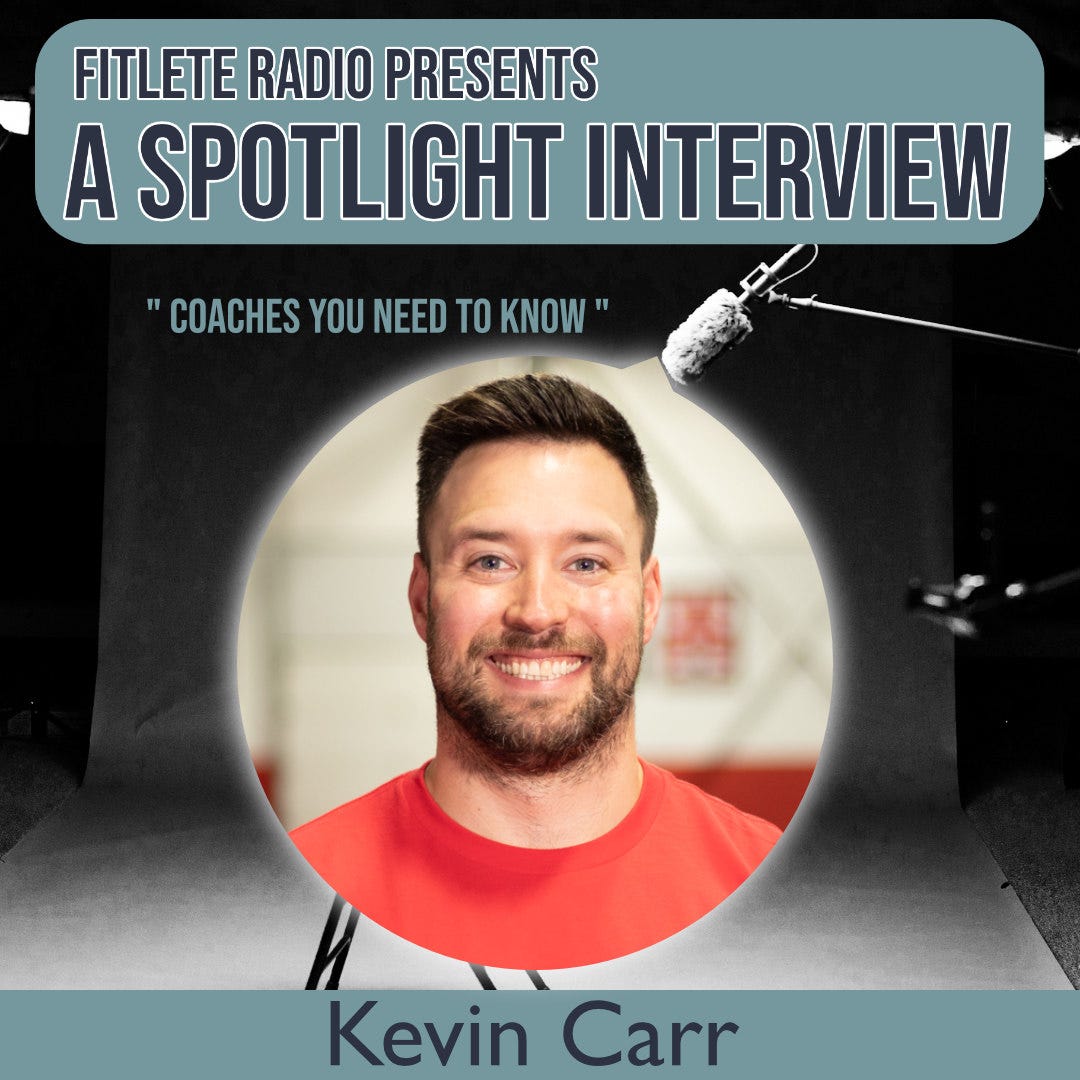
Meet Kevin Carr
Kevin Carr wears a lot of hats: strength and conditioning coach at Mike Boyle Strength and Conditioning, co-founder of Certified Functional Strength Coach, and co-founder/head therapist at Movement As Medicine, where he bridges performance and rehab under one roof. He has coached since 2008, working with US Olympians, pro athletes, kids, and general population clients, while also traveling globally to educate thousands of coaches on the MBSC system and functional training principles.
He’s also a published author of Functional Training Anatomy with Human Kinetics, a resource that breaks down how to build practical, “real-life” strength, stability, and mobility. On top of that, he holds a kinesiology degree from UMass Amherst, a massage therapy license, and a long list of continuing education certs, but still talks about coaching as a relationship business first.
How he solves clients’ aches, pains, and fears
When it comes to injuries, limitations, and past training trauma, Kevin’s first move is not a fancy exercise—it’s a deep, structured intake interview. He believes many new trainers rush to “fix” clients and skip the most crucial step: sitting down to listen to their history, beliefs, fears, and previous experiences with exercise. He emphasizes meeting clients where they are, not where the coach thinks they “should” be, and building a shared roadmap instead of a top‑down prescription. He wants clients to feel autonomy in the process, giving input on exercise selection, pace, and goals so they feel ownership instead of being dragged along.
“I always say I like to sit down with the client and draw the roadmap together.”
Handling social media myths and bad fitness advice
Kevin points out that exercise is unique compared with other professions: people don’t walk into a mechanic or doctor’s office telling them how to do their job, but they constantly show up with strong opinions about training. Social media, podcasts, magazines, and family advice all shape clients’ beliefs, which means every session comes with preconceived notions coaches have to navigate.
Instead of arguing, Kevin uses “teachable moments” during sessions—like using squats or lower-body strength work to reframe the belief that squats are “bad for knees” by connecting them to building capacity for real-life goals. He ties every technical decision back to their why: playing tennis, hiking, chasing grandkids, or simply living without pain, and he sees trust and relationship as the foundation for shifting client mindsets over time.
“If they trust you and they understand that you’re invested in them getting better, they’re going to be much more likely to listen to you than to something they heard on a podcast or read in a magazine.”
Goal setting when clients want everything
Kevin is very familiar with clients who come in wanting to lose fat, get stronger, improve their health, and perform better at a sport—all at once. His solution is to have them rank their goals, then focus on the one “domino” goal that makes the others easier, often using open‑ended questions to help clients talk through what truly matters most.
He explains that many people show up with a firehose of ideas; part of the coach’s job is to give them clarity and a plan. For example, if someone wants to play tennis more often, improve cardiovascular health, and lose weight, he’ll usually prioritize getting stronger first, because strength increases capacity, which then supports activity, cardio fitness, and eventually weight changes.
What coaches really need to be good at
Kevin is blunt about what’s missing in a lot of formal exercise science education: hands‑on coaching and people skills. He notes that you can finish a university kinesiology or exercise science program with a solid grip on anatomy and physiology but zero real-world coaching reps.
He credits starting his MBSC internship as a freshman at UMass Amherst for giving him three years of on‑floor experience before graduating, while many of his peers finished school without ever running a session. He believes internships, volunteering, and early coaching exposure are non‑negotiables because the real job is working with messy human behavior, fears, and decision‑making on the floor—not just writing perfect programs in a classroom.
He also stresses that fitness is a relationship business where clients pay good money to spend multiple hours a week with you, so communication, connection, and practical judgment around progression and regression are what separate good coaches from great ones.
Using technology without letting it run the show
On the tech side, Kevin’s philosophy is “start with a problem, then find the tech,” not the other way around. Rather than chasing every gadget, he looks for tools that solve real needs in his training environment.
For athletes, he leans on simple, effective tools: sprint timers (e.g., Arena Gear) and jump testing systems (e.g., PlyoMat) to track speed and power development over time. For both athletes and general population clients, he uses heart rate monitors (MyZone, Polar, etc.) to monitor cardiovascular responses, progress, and even spot potential red flags—his facility has identified issues like atrial fibrillation and even a heart attack because clients were wearing heart rate straps during training.
Behind the scenes, he treats software and systems as a way to improve the client experience and make the business more sustainable, not as a replacement for coaching judgment.
Key takeaways for coaches and trainers
Deep listening beats quick fixes. A thorough intake and collaborative roadmap keep clients engaged, respected, and more compliant long term.
Your job is to translate, not just prescribe. Connect exercises and progressions to a client’s real-life why—grandkids, hobbies, independence—to shift beliefs and fight misinformation.
Focus their goals before you focus their program. Ranking goals and finding the one “leverage” goal (often strength) provides clarity and better long‑term outcomes.
Education + experience + people skills = a complete coach. Degrees and certs matter, but internships, coaching reps, and communication skills are what prepare you for the real job.
Use tech to solve real problems. Simple tools like sprint timers and heart rate straps can dramatically improve programming, safety, and client buy‑in when used with intent.


