




Episode overview
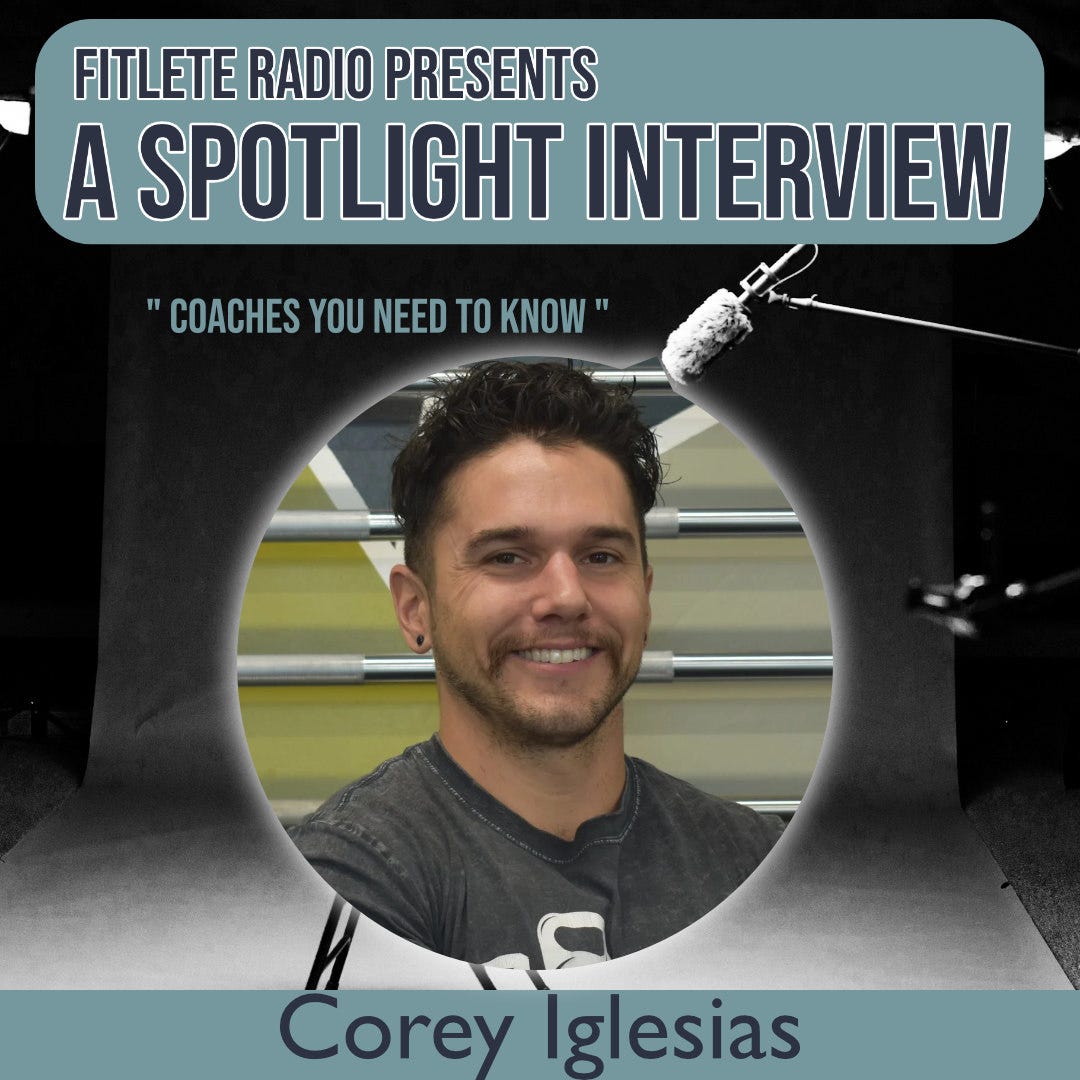
In this FITLETE Radio Trainer Spotlight, Corey Iglesias, owner of CoreFitness RVA in Richmond, Virginia, shares how a decade in the industry and an Exercise Science degree from VCU shaped his coaching philosophy and his gym. Corey talks about being a first-generation American, why he’s proud of his family’s Cuban refugee roots, and how that background fuels his work ethic and approach to serving his community. From dealing with clients’ aches, pains, and competing goals to navigating social media misinformation, Corey shows how asking better questions and creating a clear roadmap turns confusion into long-term progress. He also breaks down how a former pen-and-paper guy fully embraced tech and systems to level up his coaching, client experience, and gym operations at CoreFitness RVA.
Key topics in this episode
Roadmapping clients with aches, pains, and limitations
Corey explains that his first move with any client—especially those with injuries, pain, or past trauma—is to build a roadmap that makes the process and expectations crystal clear. He reframes timelines away from “hours and weeks” and toward “weeks, months, and years,” helping clients understand what it really takes to reach meaningful goals. By mapping from start point to end point and filling in the “in-between” with lifestyle factors, limitations, and realistic steps, he keeps progress individualized and sustainable.
Handling pop-culture fitness and social media noise
Corey shares that coaches are constantly battling what he calls “pop culture fitness,” which he describes as about 99% of what clients see on social media, TV, and in magazines. Instead of mocking detoxes, fad diets, or influencers, he emphasizes empathy and curiosity, because clients are simply chasing results and trying to help themselves. His strategy is to ask small, prying questions that clients haven’t considered so they can logically arrive at the conclusion that the trendy solution probably isn’t their best path forward.
Coaching clients with multiple goals
When clients show up with a list of goals, Corey expects that there’s usually one big goal and a bunch of “fluff” surrounding it. During his assessments, he is simultaneously watching movement and asking “a million questions” to uncover what they truly care about versus what just sounds good on paper. From there, he builds a roadmap that prioritizes the main goal, organizes the smaller ones, and clarifies the time and work required so everyone is on the same page.
What coaches really need to know
Corey is adamant that strong foundations in anatomy, physiology, and human movement are non-negotiable if a coach wants to deliver a high-level service. He points out that the low barrier to entry in personal training and some lower-level certifications often skip depth and end up just teaching people “how to work people out” rather than how to coach human bodies. In his view, lacking this base severely limits a coach’s ability to problem-solve, modify, and truly serve the client in front of them.
From pen-and-paper to systems and tech
Corey admits he’s historically been a pen-and-paper guy who was not naturally drawn to tech, but owning a gym forced him to embrace systems, apps, and automation. Inspired in part by a talk at a Raise the Bar conference, he implemented a full gym management system that handles clients, sales, and access, plus software that tracks workouts and metrics so he can quickly pull up what he needs without digging through notebooks. He believes that in today’s industry, if you’re not leveraging technology to streamline operations, you’re handicapping yourself and eating up time you could be using to coach or grow the business.
Creating space for other trainers
Beyond serving clients, Corey wants CoreFitness RVA to be a facility where other trainers can grow, refine their craft, and eventually launch their own spaces. He aims to provide a professional, supportive environment that raises the standard of coaching while also giving trainers the tools and atmosphere they need to succeed.
Key quotes
“Your clients come to you essentially with a start point and an end point, and they haven’t filled in any of the space in between there.”
“Good coaches and health professionals are constantly battling what I call pop culture fitness.”
“If you are a gym owner or a personal trainer and you are not using technology to your advantage, you are just handicapping yourself.”
Impactful takeaways
Create a clear roadmap for every client that links their starting point, their true main goal, and the realistic time frame it will take to get there.
Treat social media-fueled ideas with curiosity, not contempt—use questions to guide clients toward better choices rather than shutting them down.
Build your coaching on anatomy, physiology, and movement literacy so you can adapt to real bodies with real limitations, not just run workouts.
Use technology and systems to track programming, manage the business, and free up mental bandwidth for coaching and leadership.
If you own or run a facility, think beyond yourself—create an environment where other trainers can grow, learn, and eventually build their own paths.
Connect with Corey & CoreFitness RVA
CoreFitness RVA website: https://www.corefitnessrva.com
CoreFitness RVA on Instagram: https://www.instagram.com/corefitnessrva/


